Book Categories:
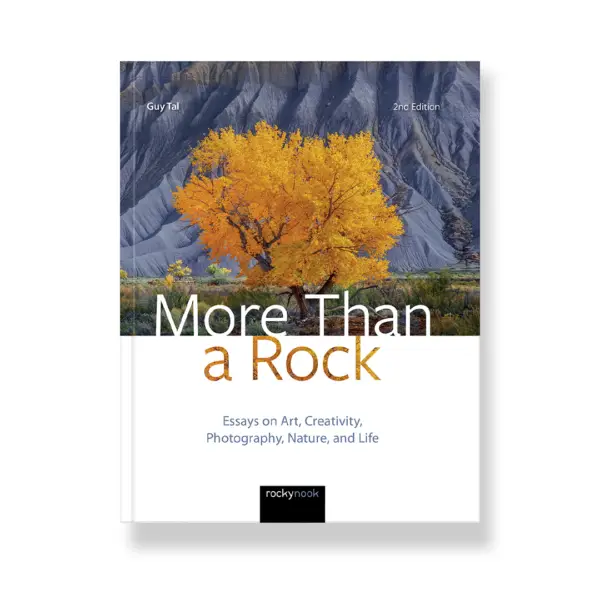
More Than a Rock, 2nd Edition
Essays on Art, Creativity, Photography, Nature, and Life
Guy Tal
Price range: $31.99 through $49.99
A deeper look at the creativity, art, expression, craft, and philosophy of landscape photography.
More Than a Rock, 2nd Edition is a passionate and personal book about creativity and expression. In this series of over 70 brief essays, photographer and teacher Guy Tal shares his thoughts and experiences as an...
Read More
Read More
| BOOK AUTHOR | Guy Tal |
|---|---|
| PAGE COUNT | 276 pages |
| TRIM SIZE | 7x9in |
| COVER | Hardbound |
| ISBN | 9781681986838 |
| PUBLISH DATE | 01/2021 |
- Table of Contents
- Part 1: Art
- Part 2: Craft
- Part 3: Experiences
- Part 4: Meditations
3 reviews for More Than a Rock, 2nd Edition
Related products
The Landscape Photographer’s Guide to Photoshop
Price range: $39.99 through $59.99
Select options
This product has multiple variants. The options may be chosen on the product page
Be Extraordinary
Price range: $35.99 through $49.99
Select options
This product has multiple variants. The options may be chosen on the product page
The Meaning in the Making
Price range: $15.99 through $29.99
Select options
This product has multiple variants. The options may be chosen on the product page
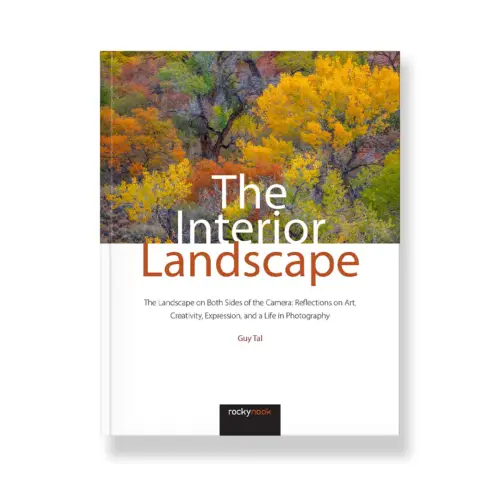
The Interior Landscape
Price range: $31.99 through $49.99
Select options
This product has multiple variants. The options may be chosen on the product page


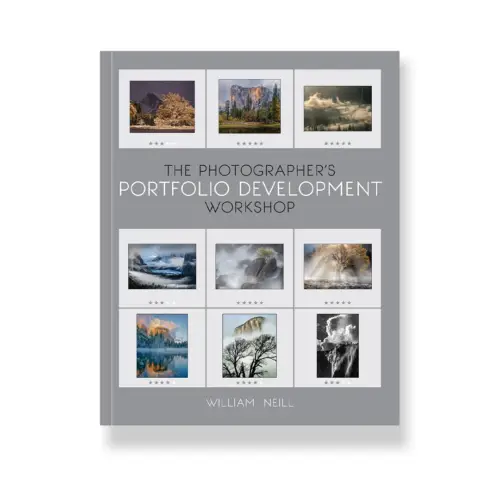
The Photographer’s Portfolio Development Workshop
Price range: $23.99 through $39.99
Select options
This product has multiple variants. The options may be chosen on the product page
Gloria –
First off, the author titled the book from a quotation “by the great photographer Edward Weston. I’ll let you read it yourself :-). Tal is an author who makes us think about our passion for photography on a different level, both technically and philosophically. After finishing the book I know that I will re-read this one and keep it in my library.
Tal ponders the upside and downside of targeting our photography toward a particular audience. A good question, even if you don’t make a living as a photographer. We all want an audience, or at least I do :-). Tal suggests that, if he had only one piece of information to give to beginning photographers, it would be to consciously move past a phase of lack of emotional feeling if you are aware of it. Tall argues that having an emotional connection to our images will make all the difference.
I enjoyed the chapter on what it means to be an “artist“. One of the points I appreciated learning is that deciding what art is, is probably one of the most subjective things humans do. Thus, worrying about other peoples’ opinion of whether or not you are an artist is pointless. He comes down to defining an artist by three things, creativity, passion, and philosophy. These are things other photography books don’t discuss and I much appreciated the discussion of it here. Interestingly, the author has a chapter arguing that photography is not about finding “the moment“ as Henri Cartier-Bresson would argue, but is instead about being so involved in what you are photographing that time and other matters are transcended. More than a moment, it’s a flow. I enjoyed reading the section and I find that for me, it rings true.
The author, though he says he has strong political opinions, believes that art transcends politics and so does not publicize his politics. Agree or not, it’s food for thought.
Our author concludes this interesting, worthwhile book on the philosophy of photography talking about why he chooses to shoot landscapes and rocks rather than people. I’ll leave it for readers to discover his reasoning but I found it novel and provocative as well. I can’t say that I disagree with him! This is not a how-to book, but a why book, the way I look at it. I enjoyed thinking about the questions he raises and reading about an aspect of photography besides technical. I think if you ponder on the questions raised in this book your photography will be, if not better, more meaningful for you.
jstrelow (verified owner) –
Thought I was going to receive a book on the how-to of photography. This is a book about Tal’s thoughts, and philosophic views, Guess I should have read the one review that is posted.
john Pehowich (verified owner) –
This a great book. There are a plethora of books about how to take pictures, which are important to get you started. There are very few books that take you to the next level especially if you want to go beyond just recording a scene. I found the Philosophicall discussions to be thought provoking that will help me with my photography. The title of the book told me this was not a how to book. If it was titled how to photograph rocks I would have expected a tutorial